Geoff's Miscellany

Book-Review

Review: Baby's Very First Library

September 12, 2017

Got this for my daughter. Don’t be fooled. It’s not a book. It’s a series of books starting with Baby’s Very First Bedtime. 

The adventure starts at night with the moon. This is fitting as reality seems like a dream. Am I awake, sleeping, in between? These experiences of the transcendent and the transitory are fundamental to being human! The story also includes toothbrushes, a trip to the stars for future scientists, self-referential breaking of the forth wall, and finally the exhausted protagonist going to sleep.

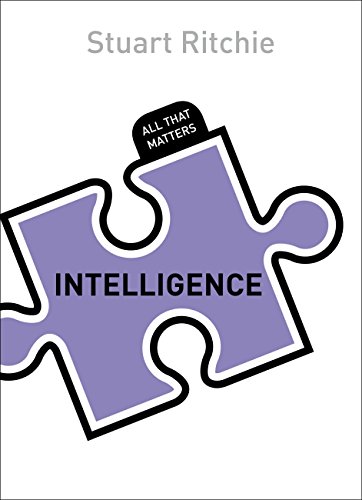
Book Review: Stuart Ritchie's Intelligence: All that matters

March 16, 2017

Stuart Ritchie, Intelligence: All That Matters. (Hodder & Stoughton, Kindle Edition 2016).

As an educator and leader, I try to stay up to date on research into personality and human potential. But sometimes I cannot keep up with recent findings. Stuart Ritchie's new book helped fill the gaps.

Dr. Ritchie is a post-doc researcher at the University of Edinburgh where he is researching the development/decline of intelligence across the life span.

Book Review: The God of the Bible and the God of the Philosophers by Eleonore Stump

January 2, 2017

The Book

Stump, Eleonore. The God of the Bible and the God of the Philosophers, 2016.

Stump's volume The God of the Bible and the God of the Philosophers deals with a question that has vexed many for centuries: is the God argued for by philosophical theologians the same being in the pages of Scripture. Atheists will often answer: no. Some Calvinists also answer: no. And open theists frequently say no.

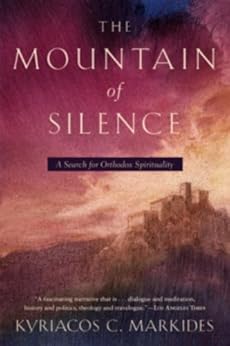
Book Review: The Mountain of Silence by K. Markides

December 22, 2016

Kyriacos C Markides, The Mountain of Silence: A Search for Orthodox Spirituality (New York: Doubleday, 2001).

Kyriacos Markides, a professor of sociology, spent several years studying mysticism and shamanistic practices in several monastic type communities. He’s written several books on these topics, this particular book is about his experiences with Father Maximos on Mt. Athos.

This book was recommended to me by O_Vivliothikarios on Twitter.

Book Review Pt 1: The Four Loves by C.S. Lewis

December 20, 2016

This is part one of a multi-part review of The Four Loves by C.S. Lewis.

The Four Loves: Introduction

Lewis, Clive Staples. The Four Loves. London: Fontana, 1964.

In Lewis’ book on the kinds and nature of love he starts the book by distinguishing between Need-love (like a small child for its mother) and Gift-love (like a man working to leave a legacy for his family which he may never see). Lewis had hoped to write the whole book based on this distinction saying essentially that Need-love is bad and Gift-love is good and Christian. What he found, though, was that this is impossible (7).

Book Review: Gorilla Mindset by Mike Cernovich

December 1, 2016

Introduction

Mike Cernovich is a civil rights lawyer, though I do not think he practices any longer. He's considered a controversial figure. I don't really care about that. A person could be utterly terrible, but it does not change the merit of their arguments or the truth value of their claims. I first came across Mike Cernovich a couple of years ago when I had found a study on ebsco about cabbage juice and heart burn symptoms. When trying to find more information about the constituents of cabbage and what it contains that might increase mucilage production in the stomach lining, I came across a blog called fit-juicer which cited the same article. While the site was clearly designed to sell his books on juicing, it had excellent recipes for juice (my wife brought a juicer into our marriage...I never would have considered one, but I'm glad we have it). Not only were his recipes tasty, but he typically cited scientific literature related to the consumption of juice or plant constituents in relation to the benefits he claimed for his juices. It was interesting. I literally went through his website using in-article links and never read the comments. I had no idea that the guy was a lawyer, a figure or controversy, or even his name.

Anyhow, well over a year later, I was working on a writing project (still am) and was looking for a more practical application of Carol Dweck’s mindset ideas that I had found in her book on motivation in education. In the process, I came across Mike Cernovich’s book Gorilla Mindset. It had a title that seemed cheesy, although most people want the things it claims to provide. I found, a preview on Scribd (or was it a pirated version?). After I looked through the exercises at the end of each chapter and saw how similar they were in design to the ones I was writing for something else, I went ahead and bought a kindle edition of the book. I was pleasantly surprised by the quality of the book. It didn’t merely provide a model for what I was trying to do myself, but it provided legitimately helpful insight into improving one’s life and happiness.

Review of Mindset by Carol Dweck

November 30, 2016

Mindset: The New Psychology of Success by Carol Dweck

This is a review and appreciation of Carol Dweck’s book on mindset. The topic of mindset is important to me because I’m a teacher and I often struggle with my own sense of melancholy and of having a static self. The negatives: The worst part about the book is that Dweck never properly defines what mindset is. There is never a sentence or paragraph in which she says, “the technical definition of mindset is…” She associates mindset with beliefs (1) and a way of seeing the world (244). From reading the book I did manage to come up with my own technical definition of mindset: the beliefs, attitudes, and processes a group or individual uses to respond to the world around them. The other part of the book I didn’t like is that it gives too many examples. I’d give a long list of evidence to prove this, but I’d be doing the same to you in my review. In all seriousness, I prefer things to go this way: explanation, evidence (enough to be convincing), followed by how-to. In some cases, the evidence given by way of examples makes the book too clunky. But I’m not the one who wrote an excellent book on mindset, she did! A final negative is that Dweck leaves out a lot of information about the importance of IQ. While I suppose that most of the people reading the book would have an above average IQ, any book on the relationship of mind and achievement ought to mention the importance of IQ. I do see why she left it out: 1) she wants people to succeed, so supplying them with self-limiting beliefs is the opposite of her goal 2) it’s bad marketing to psyche people out of the lessons you intend to teach them. The positives: The key distinction Dweck makes is between a growth and a fixed mindset. The growth mindset is a set of beliefs, attitudes, etc, that tend toward personal growth and the growth and improvement of those around you. The fixed mindset is simply the opposite. Because these are beliefs, ultimately, about the self they have wide ranging implications. Dweck applies mindset principles to school, romance, friendship, business, coaching, sports, and parenting. If you read the book, the chapters that don’t directly apply to you can be safely skipped. The relationship chapter is particularly good. Recently my pastor told me that he was impressed by the ‘stoic culture’ my wife and I had developed for problem solving, fighting, and disagreement in general. While I hadn’t read Dweck’s book when we were trying to learn to approach life that way, the flawed mindsets she outlines in her book are roughly similar to the patterns we explicitly tried to avoid and the positive mindset she recommends is our own almost verbatim, “To me the whole point of marriage is to encourage your partner’s development and have them encourage yours” (160). Another major positive for educators is that Dweck sees that education is not merely about information nor about social programming. Instead education is about training people to take ownership of their own learning while providing a nurturing atmosphere for the inevitable difficulties and failures they will experience (201-202). A good teacher provides extremely high standards and criticizes the students’ work with a view to improving it, not the students themselves. I would suggest that the most powerful chapters in the book are “Parents, Teachers, and Coaches: Where do mindsets come from?” and “Changing Mindsets: a workshop.” These two chapters are really worth the price of the book.

Review: The Curse of the High IQ

June 30, 2016

The Book
Clarey, Aaron. The Curse of the High Iq. , 2016.
This was an interesting book. I read it after a recommendation by Ed Latimore, who said that the author really helped him.It was good, but I was frustrated by it for two reasons:
  1. It described a lot of my life experiences and so reminded me of them. This frustration was good.
  2. Sometimes it felt too nihilistic.

The Good

Ultimately, this book must be read by parents who suspect they have a gifted child.  All teachers ought to read it. Why? It so effectively describes the struggles had by those who are above average, that it could help mentors avoid wasting the time of their charges.

Gifted youngsters could benefit from the last two chapters on limiting greatness and solutions, they’re quite good.

Books of 2013

December 31, 2013

In 2013 I read, what felt like, less than ever. Nevertheless, here's what I came up with when formulating a list. I wrote the list ether adding books right after I finished them or while cataloging the books in our study and realizing which ones I had read this year. I'll briefly comment on anything worth noting in the list if you care to look through it. 

Ancient Sexual Ethics

March 3, 2013

"For traditional societies, social justice, and not sexual conduct, is the basis for morality. Consequently, teaching dealing with virginity, marriage, divorce, infidelity, adultery, promiscuity, and rape are concerned not only with the sexual relationships of individuals or couples, but also with the social and economic relationships between the households in the village as a whole." Victor Mattews. The Social World of Ancient Israel 1250-587 BCE (Henrickson), 31.

Ancient forms of ethics/law were concerned with the integrity of the whole group rather than the rights of individuals. It is not that individuals did not have rights, it is just that individual desires (the desire to sleep with whomever you wish) were to be regulated on the basis of the impact those desires would have if fulfilled.