Geoff's Miscellany

Mindset

Defeating Self-Defeating Thoughts

February 2, 2019

When you narrate your life, how do you write yourself? Personally, I have a long history of narrating myself as a loser, failure, or unfortunate person. If this is your struggle I found a helpful tool for you.

The reason that your self-narration is so important is that it affects your emotions, decisions, and ultimately your character. If the story you're telling in your head is narrated by the voice of a jerk then you sacrifice your virtue as well as your personal power on the altar of self-pity. If you dramatically describe the tragedies of your life and how awful you are to an imaginary audience of zero, then you are wasting thoughts which could turn your attitudes to joy, your habits to virtue, and your demeanor to strength.
Francis Bacon: How to be Lucky

January 14, 2019

It cannot be denied, but outward accidents conduce much to fortune; favor, opportunity, death of others, occasion fitting virtue. But chiefly, the mould of a man’s fortune is in his own hands. Faber quisque fortunæ suæ [Every one is the architect of his own fortune], saith the poet. And the most frequent of external causes is, that the folly of one man is the fortune of another. For no man prospers so suddenly as by others’ errors. Serpens nisi serpentem comederit non fit draco [A serpent must have eaten another serpent before he can become a dragon]. Overt and apparent virtues bring forth praise; but there be secret and hidden virtues that bring forth fortune; certain deliveries of a man’s self, which have no name.

Martial arts for your mind: thought kata

January 10, 2019

One of the great analogies for growing in virtue is that of a battle against the passions and appetites. The particular virtues which are like a battle to develop are temperance and fortitude.

What is a Spiritual Exercise?

September 9, 2018

In What is Ancient Philosohy?, Pierre Hadot argues that ancient philosophers were offering ways of life that eschewed the pull of the passions and instead aimed at optimal human existence (happiness or ευδαιμονια).   In order to accomplish this, philosophers weren't just offering arguments or proposing ideas just to change people's ideas, they were trying to help people obtain a vision of ultimate reality and then live their lives in conformity to that reality. And so, the philosophers offered philosophical or spiritual exercises, which Hadot defines as:

Money Mindset

January 27, 2018

The Bible seems to say two things about money. That it's all good or it's all bad. Of course, what it really says is that money, like all good things, can be worshiped as an idol. Samson worships a woman as an idol (he tells her how to released him from his vow to God), Israel worships the Torah as an idol (see the New Testament), and Adam and Eve treat food as an idol, trusting it for wisdom rather than God. Yet none of these is bad. I suspect that Christians are more suspicious of money because theologians, who are notoriously bad at being creative, industrious, and good with people (all skills that help one make money), then to teach that money (which they cannot make easily) is almost entirely bad, rather than hitting the balance appropriately.

Growth and Biblical Wisdom

January 18, 2018

Everybody has a self-theory, some hypothesis or doctrine about what/who they are. Some of these theories are simple sentences like, "I'm an athlete." Others are more fundamental, like, "I'm worthless." According to Carol Dweck and Daniel Molden, our self-theories lead directly to our self-esteem maintenance/repair strategies after we fail at a task or to reach a goal. (Dweck, 130-131). They have distilled the various self-theories into two helpful categories.

Loving your enemies does not mean neglecting to love your friends.

January 5, 2018

Jesus put love pretty high up in his list of priorities for human flourishing. The biggest problem for modern romantics who prefer to rhapsodize about love is that he said to actually do it. Look how one of his closest friends summarized his message:

1 John 3:18 Little children, let us not love in word or talk but in deed and in truth.

Intellectual Weakness

December 27, 2017

Nobody wants to be weak. Weakness leads to losing.

Weakness leads to resentment.[1]

Intellectual weakness is perhaps the most subtle weakness.

It compounds itself. Physical weakness makes us feel bad.

Intellectual weakness makes us feel smug or leaves us unable to see our weaknesses, intellectual weakness is like a disease with an immune system of its own protecting it from detection.

Don't Be Yourself

November 21, 2017

You've heard it before. You have some problem and well-meaning person mothers you by saying with a straight face: "Just be yourself."

If "be yourself" means "be honest about yourself, your weaknesses, and your abilities, lie neither to yourself or others" then I agree. If it means do what you truly and really think is best, then I absolutely agree. 

Marcus Aurelius' Questions for a Strong Mindset

October 5, 2017

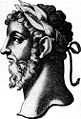
Marcus Aurelius - Project Gutenberg eText 15877.jpg

What am I doing with my soul? Interrogate yourself, to find out what inhabits your so-called mind and what kind of soul you have now. A child’s soul, an adolescent’s, a woman’s? A tyrant’s soul? The soul of a predator— or its prey?[1] -Marcus Aurelius Med. Bk V, chap 11
One of the most valuable exercises we can perform is to determine the content of our thoughts and the state of our souls.

With the four questions above, one of the greatest mindset writers of all time, Marcus Aurelius, helps us to determine if our mindset is strong or weak.